Saturday, 11 June 2016

5 Fascinating facts about Shakespeare’s Romeo and Juliet

I have to admit reading a Shakespeare play in high school was a daunting task, primarily because it wasn’t the language that I grew up with-it was a foreign language. Or was it? The English language owes a great debt to Shakespeare, he invented over 1700 of our common words by changing nouns into verbs, changing verbs into adjectives, connecting words together, adding prefixes and suffixes and devising words wholly original. English was not my best subject.
Putting grammar aside here are 5 fascinating facts about Shakespeare’s Romeo and Juliet
-
who knew?

Romeo and Juliet, an enduring love story about two young star-crossed lovers whose deaths ultimately unite their feuding families. A plot from an actual Italian tale is believed that the feuding families were from Verona, Italy.

Shakespeare's Romeo and Juliet, a tragic story about revenge, love and death-a classic love story that’s been told and retold to every generation since first hitting the stage in 1594.In this painting I set the tone of the scene, Juliet’s final moments of life. We can begin with Juliet’s position in this painting-here she unknowingly reads the storybook “Romeo and Juliet” and learns of her fate and with this she resolves to take her own life “Then I’ll be brief. O happy dagger, This is thy sheath. There rust and let me die.” The book -a symbol of her reality was added reinforcing that this story is her story and Juliet continues to read discovering her tragic destiny. She shows the beginnings of increasing self-possession and confidence that ultimately lead her to seek her own fate rather than a destiny imposed upon her by her parents or what seems to be.
1. Shakespeare loved to dramatize his stories and he did so with Romeo and Juliet. He made Juliet several years younger than Romeo; she was a young girl of thirteen years old. What was Shakespeare thinking of? It’s even more unsettling to the modern audience- I’m going to speculate and announce that Shakespeare was a mastermind of power peddling, after all getting attention is an art itself

2. Shakespeare’s likely sources for the story came from other authors, namely Giulietta e Romeo-a novella by the Italian author Matteo Bandello, writtenin1554.

3. “Romeo, Romeo wherefore art thou Romeo?” is the play’s most famous line but it’s not what we all think it means. Juliet is asking ‘why” art thou Romeo and not ‘where’ art thou Romeo making us think was the problem Romeo and not his last name, the Montages.

4. The legendary balcony scene where Juliet awaits her Romeo probably never even took place. Elizabethan England didn’t know what a balcony was until later in time until then it was foreign or exotic design.

5. Each year Valentine’s are written to Juliet by the thousands in Verona, Italy, the home of Romeo and Juliet.​

Who knew?

William Shakespeare- we’re still talking about you! And it’s the very reason why I’ve decided to dedicate my time to produce visual contents depicting some of Shakespeare’s more popular writings.

Below you’ll find my creative take on Juliet, the final moments before her death.  It’s the first painting to my "Shakespeare-A Work of Art " collection and the first of my struggles.
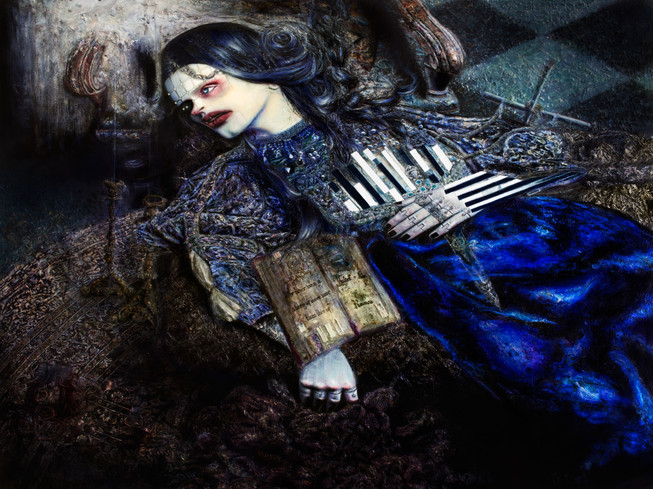
Below you’ll find my creative take on Juliet, the final moments before her death. It’s the first painting to my "Shakespeare-A Work of Art " collection and the first of my struggles. It’s going to be a challenge ahead but I’m in it for the long haul.

Artists! What’s the #1 thing you’re struggling with at the moment? Leave a comment and make sure to connect with me on https://www.facebook.com/Siriaus_Scion


 Title:"The Torch Doth Not Burn Tonight"
Medium: Oil Paint on Canvas, Cold Wax, Swarovski crystals, gold leaf
Dimensions: 48' x 36'
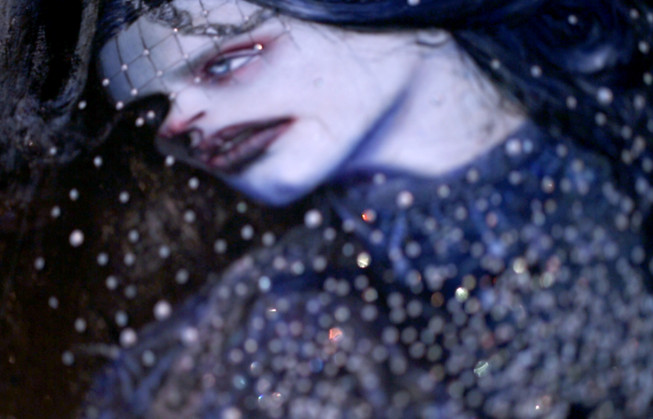
Below you’ll find my creative take on Juliet, the final moments before her death. It’s the first painting to my "Shakespeare-A Work of Art " collection and the first of my struggles. It’s going to be a challenge ahead but I’m in it for the long haul.
tattoo 5.3.317-318
"For never was a story of more woe than this of Juliet and her Romeo."
5.3.317-318  "For never was a story of more woe than this of Juliet and her Romeo."

Shakespeare's Romeo and Juliet, a tragic story about revenge, love and death-a classic love story that’s been told and retold to every generation since first hitting the stage in 1594.

Shakespeare's Romeo and Juliet, a tragic story about revenge, love and death-a classic love story that’s been told and retold to every generation since first hitting the stage in 1594.In this painting I set the tone of the scene, Juliet’s final moments of life. We can begin with Juliet’s position in this painting-here she unknowingly reads the storybook “Romeo and Juliet” and learns of her fate and with this she resolves to take her own life “Then I’ll be brief. O happy dagger, This is thy sheath. There rust and let me die.” The book -a symbol of her reality was added reinforcing that this story is her story and Juliet continues to read discovering her tragic destiny. She shows the beginnings of increasing self-possession and confidence that ultimately lead her to seek her own fate rather than a destiny imposed upon her by her parents or what seems to be.
In this painting I set the tone of the scene, Juliet’s final moments of life. We can begin with Juliet’s position in this painting-here she unknowingly reads the storybook “Romeo and Juliet” and learns of her fate and with this she resolves to take her own life “Then I’ll be brief. O happy dagger, This is thy sheath. There rust and let me die.” The book -a symbol of her reality was added reinforcing that this story is her story and Juliet continues to read discovering her tragic destiny. She shows the beginnings of increasing self-possession and confidence that ultimately lead her to seek her own fate rather than a destiny imposed upon her by her parents or what seems to be.

Shakespeare's Romeo and Juliet, a tragic story about revenge, love and death-a classic love story that’s been told and retold to every generation since first hitting the stage in 1594.In this painting I set the tone of the scene, Juliet’s final moments of life. We can begin with Juliet’s position in this painting-here she unknowingly reads the storybook “Romeo and Juliet” and learns of her fate and with this she resolves to take her own life “Then I’ll be brief. O happy dagger, This is thy sheath. There rust and let me die.” The book -a symbol of her reality was added reinforcing that this story is her story and Juliet continues to read discovering her tragic destiny. She shows the beginnings of increasing self-possession and confidence that ultimately lead her to seek her own fate rather than a destiny imposed upon her by her parents or what seems to be.
Moving along the painting you can find other symbols representing the tragic aftermath of Juliet’s dying moment. The withered roses left on the side were once buoyant in vibrant colour and unconscious love, are now left on the ground lifeless-a sign of mourning. Juliet compared Romeo to a rose and that if a rose were given another name; it would still be a rose in its essence.

Shakespeare's Romeo and Juliet, a tragic story about revenge, love and death-a classic love story that’s been told and retold to every generation since first hitting the stage in 1594.In this painting I set the tone of the scene, Juliet’s final moments of life. We can begin with Juliet’s position in this painting-here she unknowingly reads the storybook “Romeo and Juliet” and learns of her fate and with this she resolves to take her own life “Then I’ll be brief. O happy dagger, This is thy sheath. There rust and let me die.” The book -a symbol of her reality was added reinforcing that this story is her story and Juliet continues to read discovering her tragic destiny. She shows the beginnings of increasing self-possession and confidence that ultimately lead her to seek her own fate rather than a destiny imposed upon her by her parents or what seems to be.
Candles were added to represent energy and light but not for long. These are the same candles that symbolized elemental magic-a source of creation and the burnt out candles now show that Juliet has passed on to the spirit realm.
A cross bar was placed next to Juliet, showing her character as having a life of her own just as Shakespeare had intended. In this painting Juliet is portrayed as Shakespeare’s marionette, she’s become a visual metaphor for his ideas and she exists as an independent soul. Shakespeare never sidelined his female characters even in a time when women were not allowed to perform on stage.

Romeo and Juliet a universal piece of work-his exploration of the human condition makes his works timeless and I’ve added a time machine to the painting to symbolize this matter.This machine is a hypothetical symbolic device permitting Shakespeare’s characters and stories to travel into the future.

If you’re interested in other works in progress, please visit : www.siriaus.com

If you found this post interesting and would like to receive upcoming related posts feel free to subscribe to my newsletter!

The Torch Doth Not Burn Tonight (Painting) : A Creative Interpretation of Shakespeare's Romeo + Juliet Play

The Torch Doth Not Burn Tonight (Painting) : My Creative Interpretation of Shakespeare's Romeo + Juliet Play


Title :
"The Torch Doth Not Burn Tonight"

Shakespeare's Romeo and Juliet, a tragic story about revenge, love and death-a classic love story that’s been told and retold to every generation since first hitting the stage in 1594.In this painting I set the tone of the scene, Juliet’s final moments of life.

Below you’ll find my creative take on Juliet, the final moments before her death. It’s the first painting to my "Shakespeare-A Work of Art " collection.

Shakespeare's Romeo and Juliet, a tragic story about revenge, love and death-a classic love story that’s been told and retold to every generation since first hitting the stage in 1594.In this painting I set the tone of the scene, Juliet’s final moments of life.

Title:
The Torch Doth Not Burn Tonight

Medium: Oil on Canvas, Cold Wax, Swarovski crystals, Gold Leaf
Dimensions: 48' X 36'

Shakespeare's Romeo and Juliet, a tragic story about revenge, love and death-a classic love story that’s been told and retold to every generation since first hitting the stage in 1594.In this painting I set the tone of the scene, Juliet’s final moments of life.  Below you’ll find my creative take on Juliet, the final moments before her death. It’s the first painting to my "Shakespeare-A Work of Art " collection.
Shakespeare's Romeo and Juliet, a tragic story about revenge, love and death-a classic love story that’s been told and retold to every generation since first hitting the stage in 1594.In this painting I set the tone of the scene, Juliet’s final moments of life.
Medium: Oil on Canvas, Cold Wax, Swarovski crystals, Gold Leaf
Dimensions: 48' X 36'
Shakespeare's Romeo and Juliet, a tragic story about revenge, love and death-a classic love story that’s been told and retold to every generation since first hitting the stage in 1594.In this painting I set the tone of the scene, Juliet’s final moments of life.

tattoo :   5.3.317-318 "For never was a story of more woe than this of Juliet and her Romeo."
5.3.317-318 "For never was a story of more woe than this of Juliet and her Romeo."

We can begin with Juliet’s position in this painting-here she unknowingly reads the storybook “Romeo and Juliet” and learns of her fate and with this she resolves to take her own life “Then I’ll be brief. O happy dagger, This is thy sheath. There rust and let me die.” The book -a symbol of her reality was added reinforcing that this story is her story and Juliet continues to read discovering her tragic destiny. She shows the beginnings of increasing self-possession and confidence that ultimately lead her to seek her own fate rather than a destiny imposed upon her by her parents or what seems to be.
Moving along the painting you can find other symbols representing the tragic aftermath of Juliet’s dying moment. The withered roses left on the side were once buoyant in vibrant colour and unconscious love, are now left on the ground lifeless-a sign of mourning. Juliet compared Romeo to a rose and that if a rose were given another name; it would still be a rose in its essence.

Candles were added to represent energy and light but not for long. These are the same candles that symbolized elemental magic-a source of creation and the burnt out candles now show that Juliet has passed on to the spirit realm.A cross bar was placed next to Juliet, showing her character as having a life of her own just as Shakespeare had intended.  In this painting Juliet is portrayed as Shakespeare’s marionette, she’s become a visual metaphor for his ideas and she exists as an independent soul. Shakespeare never sidelined his female characters even in a time when women were not allowed to perform on stage.

Candles were added to represent energy and light but not for long. These are the same candles that symbolized elemental magic-a source of creation and the burnt out candles now show that Juliet has passed on to the spirit realm.A cross bar was placed next to Juliet, showing her character as having a life of her own just as Shakespeare had intended.

In this painting Juliet is portrayed as Shakespeare’s marionette, she’s become a visual metaphor for his ideas and she exists as an independent soul. Shakespeare never sidelined his female characters even in a time when women were not allowed to perform on stage.

Romeo and Juliet a universal piece of work-his exploration of the human condition makes his works timeless and I’ve added a time machine to the painting to symbolize this matter. This machine is a hypothetical symbolic device permitting Shakespeare’s characters and stories to travel into the future.Candles were added to represent energy and light but not for long. These are the same candles that symbolized elemental magic-a source of creation and the burnt out candles now show that Juliet has passed on to the spirit realm.A cross bar was placed next to Juliet, showing her character as having a life of her own just as Shakespeare had intended.  In this painting Juliet is portrayed as Shakespeare’s marionette, she’s become a visual metaphor for his ideas and she exists as an independent soul. Shakespeare never sidelined his female characters even in a time when women were not allowed to perform on stage.

Romeo and Juliet a universal piece of work-his exploration of the human condition makes his works timeless and I’ve added a time machine to the painting to symbolize this matter. This machine is a hypothetical symbolic device permitting Shakespeare’s characters and stories to travel into the future.

Sunday, 5 June 2016

Julius Caesar: A Hero or Villain (PART 1)

Julius Caesar:
A Hero or Villain?
Perhaps Both


It's the age of tyranny, the end of the republic, a time of treachery and the beginning of an empire. This is the reign of Julius Caesar: Rome's greatest general. He was both a hero and a villain, he expands a kingdom and launches a bloody civil war. Ruthless rivals conspire a deadly plot against him. New research reveals that his own actions led him closer to death and a long simmering conspiracy seals his fate.
The republic of Rome has survived for 400 years. But it's an empire without an emperor; instead it was ruled by elected officials and the law. The Senate is at the very top of the society; an elite class of men, all equal, all desperately competing for fame and glory. Their ambition is the force that fuels the state. The Romans understand what a powerful incentive individual achievement and reward it can be and Rome's greatness depends on giving great men incentive to do great deeds. To win honor and prestige they expand the empire and build a city; risking that one day one man may become too powerful.


Caesar Emerges

 By 44 BC Julius Caesar is the greatest of these men. He pushes all the ideas that the republic has always encouraged to absolute extremes, but his actions will bring the republic to its knees. Caesar realizes that he's living in an age where the old ways are about to change and so he is willing to take a series of steps that will lead to civil war and shake up the system. It will cost him his life. No one is left to challenge him, he manoeuvres, claws and kills his way to the top becoming dictator and the most powerful man in Rome. For that reason alone Caesar is a marked man, there are those that are willing to do anything to stop him. They are conspiring together very carefully this whole event that has to be very carefully choreographed yet it ends in complete savagery. He dies being stabbed 23 times on the floor of the Senate's meeting house. The journey to this day or the "Ides of March" began 450 years earlier. Then also, the aristocracy began to exile a dictator, its own king and a Roman republic was born. The final king was a tyrant, he was expelled and from that point of his explosion the Romans utterly determined that no longer will they be ruled by one man. Their word for king wreaks with an object of the most passionate hatred. The revolt is celebrated throughout the republic and its leader becomes a legend, his name is carried proudly by his descendants.

Brutus, one of Caesars closest friends, is among the Senate. He is an immensely important person, Brutus is the very symbol, the nature, the foundation, origin of the republican institutions. Romans place enormous value on history, tradition and family. Self appointed guardians are the heads of ancient clans, these were the men who really ran the city. Private meetings among these men took place in luxurious surroundings where business proposals were presented to honourable men with strong political ties. This is where the future of the republic was stitched up.


Ruthless Politics in Rome

It's a ruthless world where violence is just another political tool. Perhaps it makes sense to think of aristocratic factions in the republic operating almost like mafia families. Those who were rewarded power by the republican system of government have the ability to win legions, wealth and the backing of their wildest dreams. Between them they allocate political appointments, trade concessions, and military commands. But just as the mafia operate within rules so did the Roman aristocracy. Ideally the way the legislative structure is set up is to have not one man in the republic outshine the others. Forty years before Caesars time the Romans lived through a failed system of viscous dictatorship. A general by the name of Sulla has seized power.  Sulla wins a terrible bloody civil war and he posts the names in public on a list of senators who were to be killed and the property that was to be confiscated or sold. That was the world in which Caesar grew up in. Young Caesar was stripped from his wealth and forced to flee. Sulla with a sort of gracious wave of the hand finally decided to pardon him. Sulla who was an ambitious a gambler, probably saw in Caesar someone rather like himself, and as he parted Caesar he gave warning that he ,this young man, was very dangerous. Sulla was probably first to notice Caesar and his potential, twenty centuries since then, countless others have tried to understand him; a man whose extraordinary actions are well recorded, but whose motives can be difficult to grasp.


All hail Caesar. Sketch drawing done by Jasmina Tuzovic. Ruthless Politics in Rome  It's a ruthless world where violence is just another political tool. Perhaps it makes sense to think of aristocratic factions in the republic operating almost like mafia families. Those who were rewarded power by the republican system of government have the ability to win legions, wealth and the backing of their wildest dreams. Between them they allocate political appointments, trade concessions, and military commands. But just as the mafia operate within rules so did the Roman aristocracy. Ideally the way the legislative structure  is set up is to have not one man in the republic outshine the others.  Forty years before Caesars time the Romans lived through a failed system of viscous dictatorship. A general by the name of Sulla has seized power.  Sulla wins a terrible bloody civil war and he posts the names in public on a list of senators who were to be killed and the property that was to be confiscated or sold. That was the world in which Caesar grew up in. Young Caesar was stripped from his wealth and forced to flee. Sulla with a sort of gracious wave of the hand finally decided to pardon him. Sulla who was an ambitious a gambler, probably saw in Caesar someone rather like himself, and as he parted Caesar he gave warning that he ,this young man, was very dangerous. Sulla was probably first to notice Caesar and his potential, twenty centuries since then, countless others have tried to understand him; a man whose extraordinary actions are well recorded, but whose motives can be difficult to grasp.                                                  All hail Caesar.
                                   Sketch done by Siriaus


What are your thoughts on Caesar-I would love to know what you think. 

If you found this blog post helpful feel free to subscribe to my blog post newsletter!